

Fall Sale · 50% off · Free shipping to New Zealand
The Active YearsHealth & Living After 60Advertorial
Reader StoryBalance · Men Over 60
My Father-in-Law Fell and Died in His Garage Last Month. At His Funeral, I Saw Myself.
He was 72. He wasn't dizzy. He hadn't been drinking. His knees just gave out. I'm 63, and I'd started grabbing the furniture the same way he did. Here's what I learned about why, and the one thing I changed that same night.
GW
Gary Walsh, 63 · Retired mechanic · As told to The Active Years
Updated 21 October 2026·6 min read·231 comments
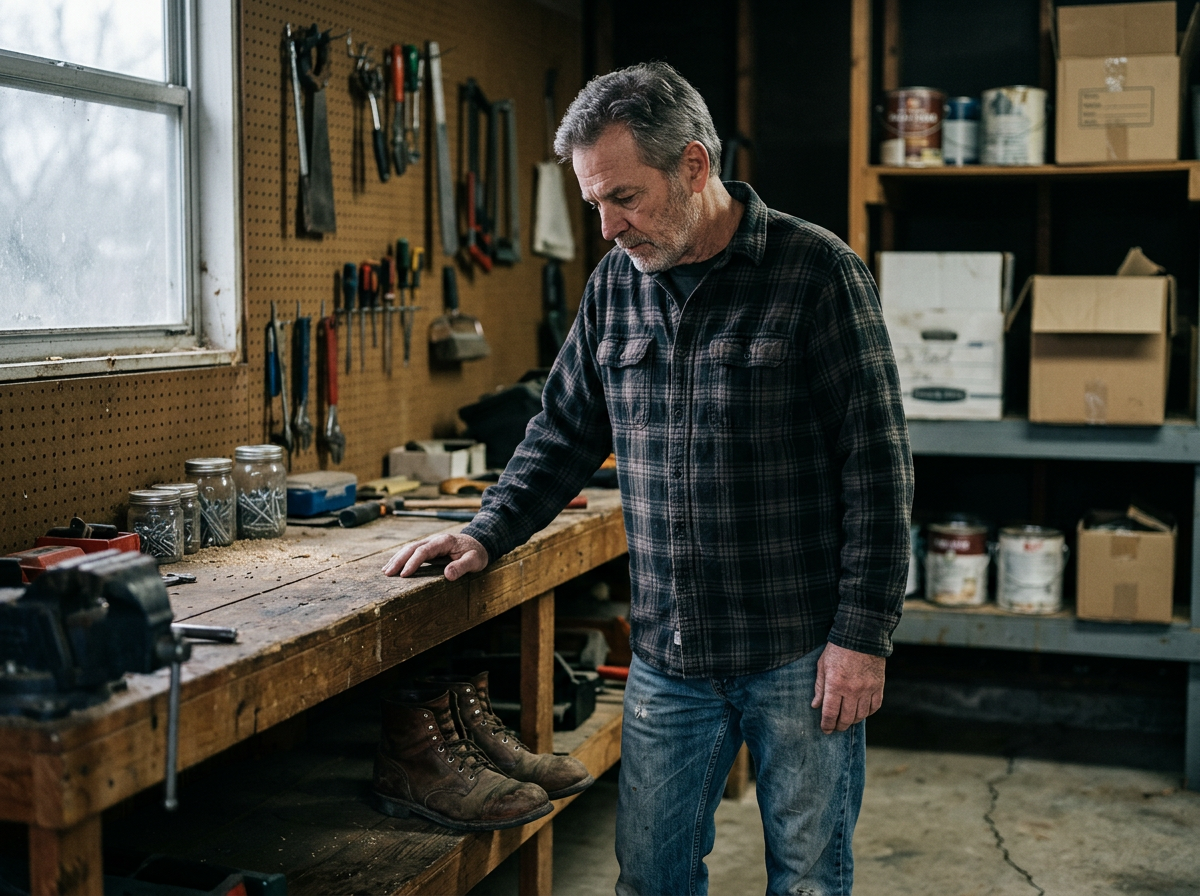
Frank's garage. His work boots are still under the bench. My wife can't bring herself to move them.
Frank was reaching for a screwdriver on the top shelf. That's all. Something he'd done ten thousand times in that garage.
His knees went. He went down, and his head hit the concrete. He was gone before the ambulance got there.
The coroner said it was the fall that killed him.
But I know what really killed him.
He stopped moving. About six months before.
Stopped walking the dog.
Stopped his Saturday morning trip to the hardware store. Forty years he'd done that.
Stopped doing anything that kept him on his feet for more than twenty minutes.
Because his feet hurt. His knees hurt. His back hurt.
So he sat.
"And his body forgot how to catch him."
Frank, a few months before. The lead hung on that hook by the door the whole time. Biscuit stopped asking.
At the funeral
I was standing at the back of the church when it hit me. I'd been sitting a lot more lately, too.
Not because I wanted to. Because standing hurt.
It started small. So small I didn't count any of it.
The little compromises
Skipping the morning walk because my feet were still sore from the day before.
Driving to the corner shop instead of walking it.
Sitting on the ride-on mower instead of pushing the old one.
None of it seemed like a big deal at the time. Then I noticed something else.
My balance was off.
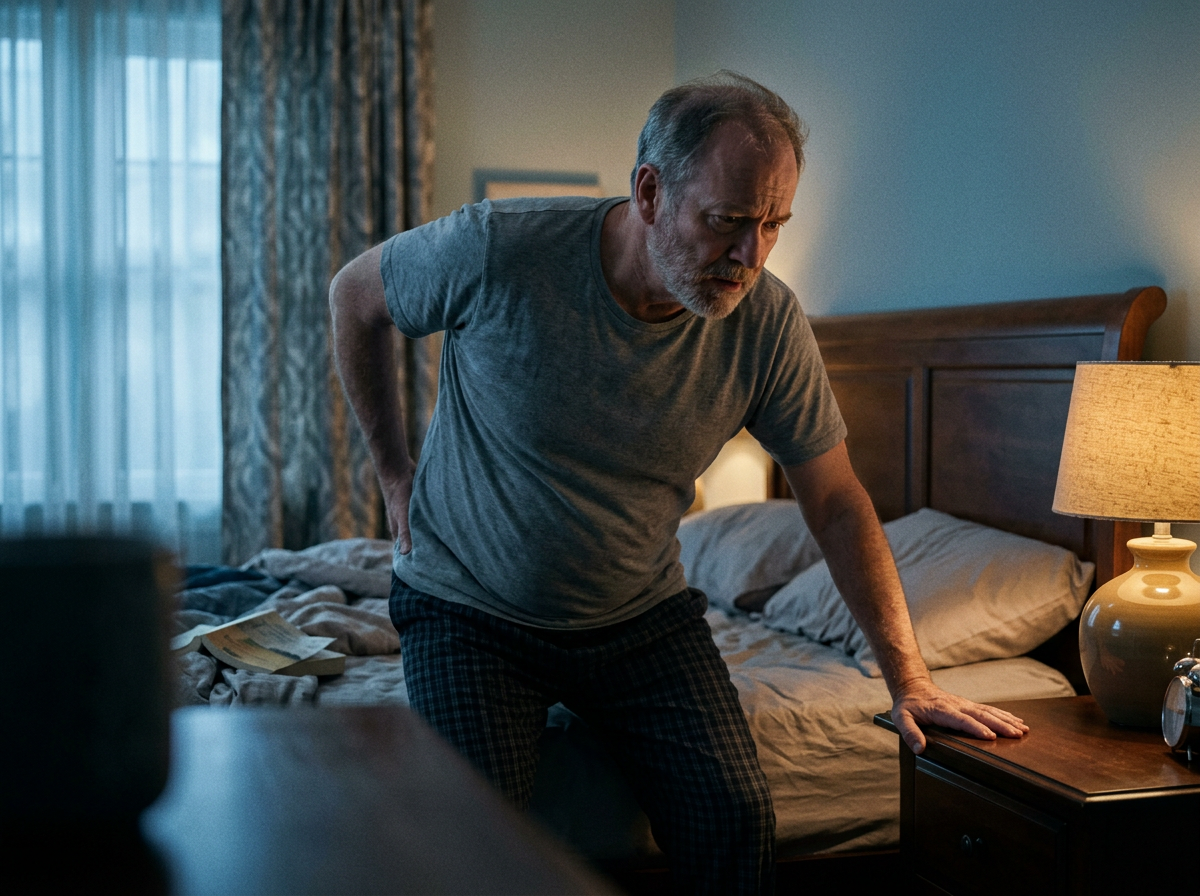
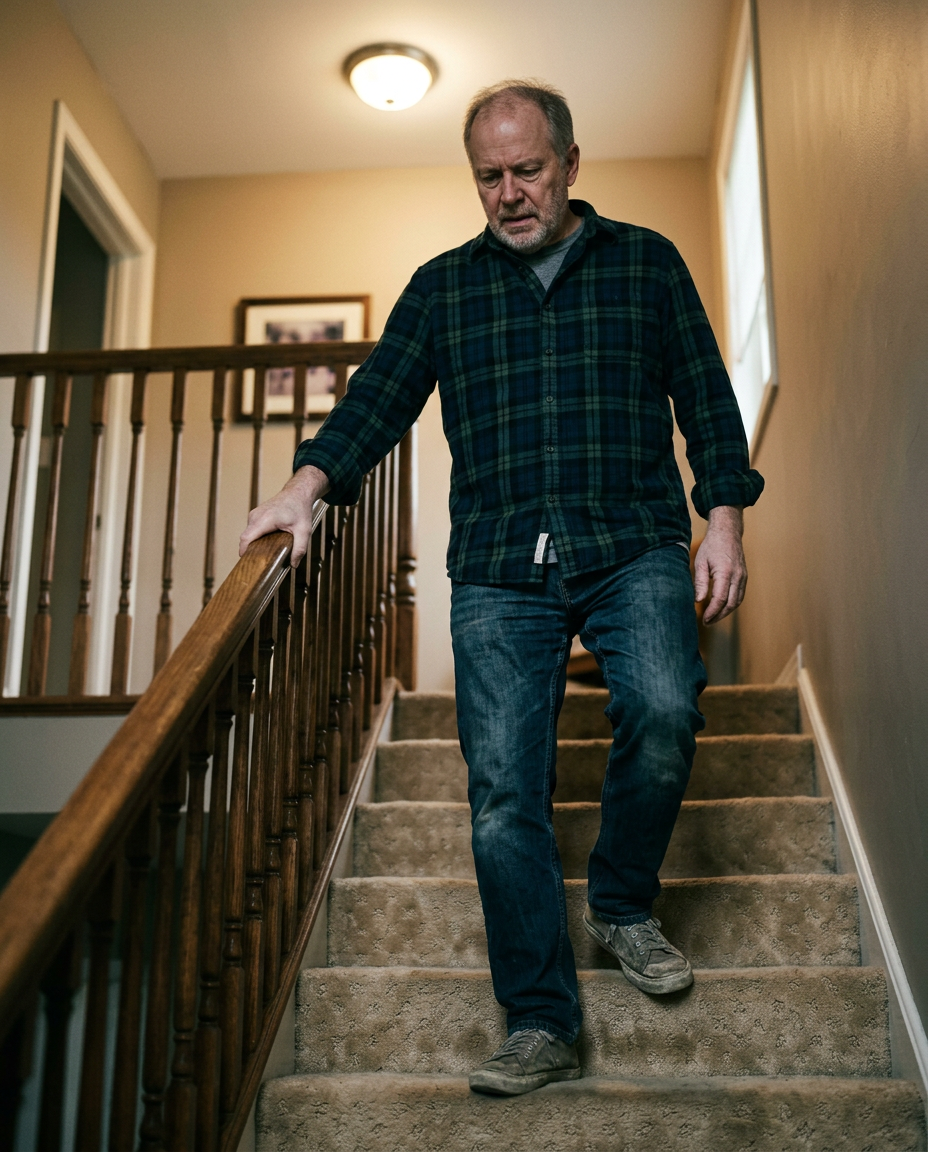
Getting out of bed. A wobble. A hand on the nightstand.The stairs. Gripping the rail harder than I used to.
I wasn't old. I was sixty-three. But my body was shutting down the same way his did.
Because when you stop moving, your body stops working. Your muscles weaken. Your balance goes. Your joints stiffen up.
And one day, you fall. Maybe in the garage, like Frank. Maybe in the shower. On the stairs. Getting out of the car.
Where doesn't really matter.
"What matters is whether your body can still catch you. And mine couldn't anymore."
That night
I went home and looked up the numbers. I wish someone had shown me sooner.
1 in 4
adults aged 65 and over falls every year.
2×
Falling once doubles your chances of falling again.
#1
Falls are the leading cause of injury death in adults 65 and over.
Source: U.S. Centers for Disease Control and Prevention (CDC), older adult falls data.
And here's the part that got me. Most people who fall don't tell their doctor. Frank never mentioned the wobbles. Not to his doctor. Not to my wife. Not to anyone.
I hadn't either.
At the wake, my wife Linda said something I couldn't shake: "He was fine six months ago. Then he just... gave up."
She didn't mean in his head. She meant his body. He stopped fighting to stay on his feet, and his body took that as permission to quit.
I wasn't going to let that happen to me. But I also wasn't going to pretend the pain wasn't real.
Because it was real. Every single morning.
The first ten minutes out of bed, my feet felt like I was walking on broken glass. My lower back seized up if I stood too long. My knees ached going up the stairs.
And I'd tried to fix it. Properly tried.
Everything I tried
Insoles
Squashed flat by noon. Every brand.
Expensive running shoes
The kid at the shoe shop swore they'd help. Soft as a pillow, and about as much support.
Custom orthotics
Cost a small fortune. Did nothing I could feel.
Physio
Months of it. My knees were worse after some sessions than before.
A pair of shoes my mate Steve mentioned in passing
By the end of the first day, I felt solid on my feet. First time in years.
What Steve said
"Carol didn't want me ending up like her dad."
Steve and I worked in the same workshop for twenty years. He came to the funeral. Afterwards, outside, he mentioned that his wife Carol had bought him some orthopedic walking shoes after her own father had a fall.
"Her thinking was, if I'm going to be on my feet, I need shoes that actually hold me up," he said. "My back pain was gone in about two weeks."
I didn't believe him. Then he said the thing that made sense of all of it.
"You haven't got a getting-older problem, Gaz. You've got a shoe problem."
Think about what most of us wear. Flat shoes with nothing in them. Or squishy foam that feels nice in the shop and collapses the minute you put weight on it. Either way, there's no structure holding your foot steady.
1
Your feet aren't absorbing the shock
So your joints are. Every step. Thousands of times a day.
2
Your knees, hips and back compensate
They bend and tilt out of line to keep you upright. Day after day. Year after year.
Until one day they just give out
And when they do, you're not catching yourself. You're going down. Hard.
I fixed engines for forty years. If a customer came in with a car pulling to one side and chewing through its tyres, you didn't start with the steering wheel. You checked what was touching the road.
Nobody had ever checked what was touching the road on me.
That night I looked them up. They were 50% off, shipping was free, and there was a 30-day money-back guarantee. If they didn't work, I'd send them back and accept that this was just how it was now. I had nothing to lose. Frank had lost everything.
I ordered them before bed.
Four days later
I put them on that Saturday morning and went about my day
Round the house first. Then the errands I'd been putting off.
Around the house
Stable. Supportive. Not stiff. They felt like they were holding my foot, not just sitting under it.
The errands
The hardware store. The supermarket. The post office. A good few hours on my feet.
That evening
My feet didn't hurt. My back didn't hurt. And when I walked, I felt solid. Like my body remembered how to hold me up.
This is one man's experience. Everyone's body is different and results vary.
Three weeks in
I wore them every day. Then I started doing the things I'd quietly given up.
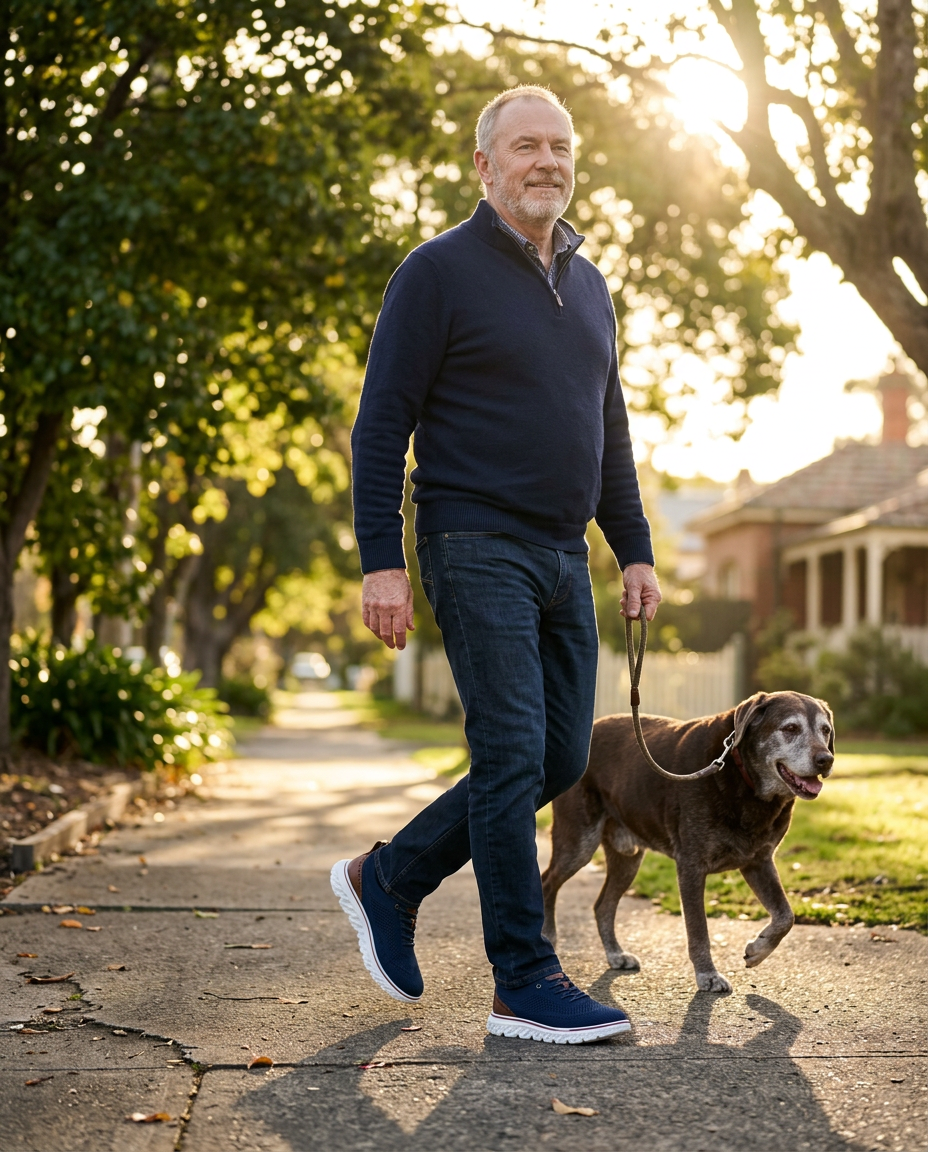
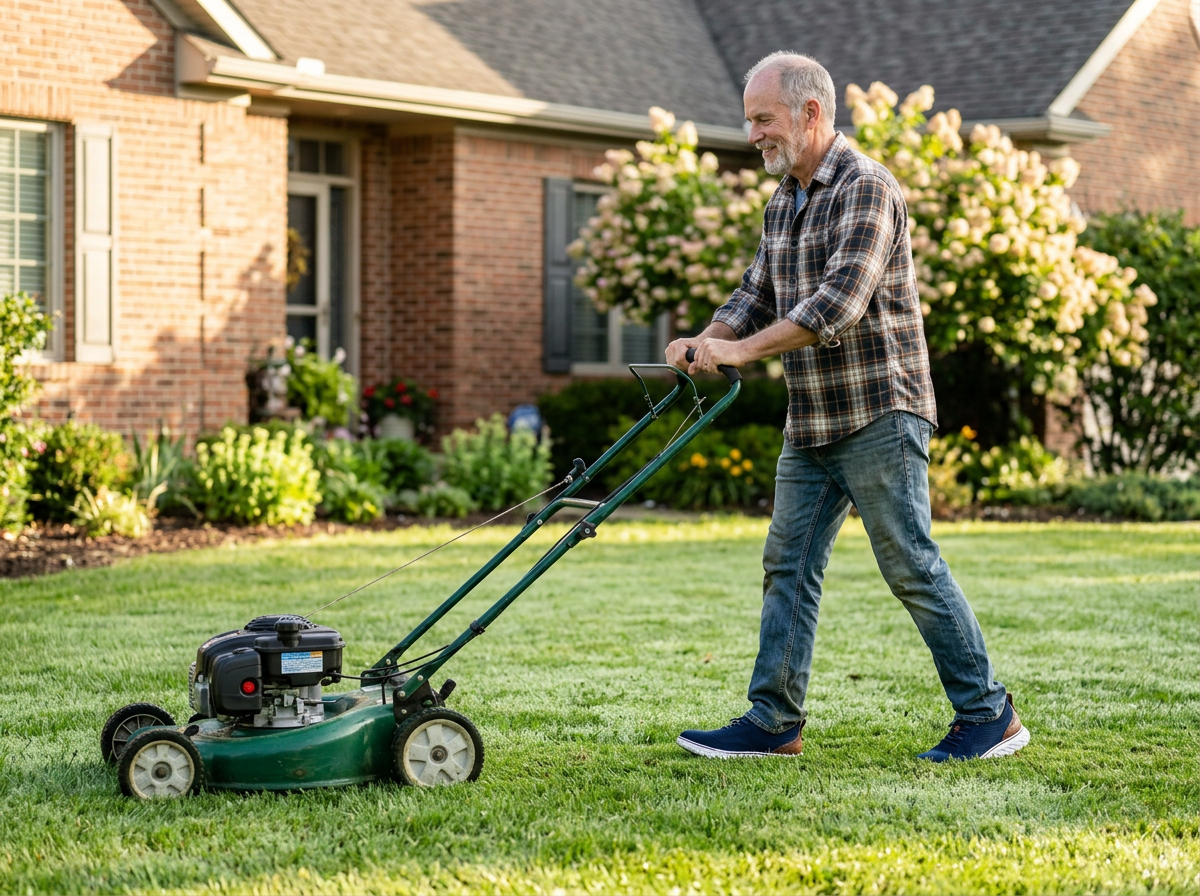
Walking Biscuit, Frank's old girl. Every morning.Back behind the push mower. The ride-on mower is for sale.
Walked the dog every morning. We took Biscuit in after Frank. She's never had so many walks.
Mowed the lawn with the push mower. Front and back.
Stood in the garage for two hours sorting through Frank's tools. Didn't sit down once.
No pain. But that wasn't even the best part.
No wobbling.
No gripping the railing.
No catching myself on the furniture.
My balance came back. Because my body wasn't fighting my shoes anymore. It was moving the way it's supposed to.
One man's experience. Results vary.
Linda noticed before I said anything. "You seem steadier," she said one night. I didn't tell her about the shoes. I wasn't sure yet.
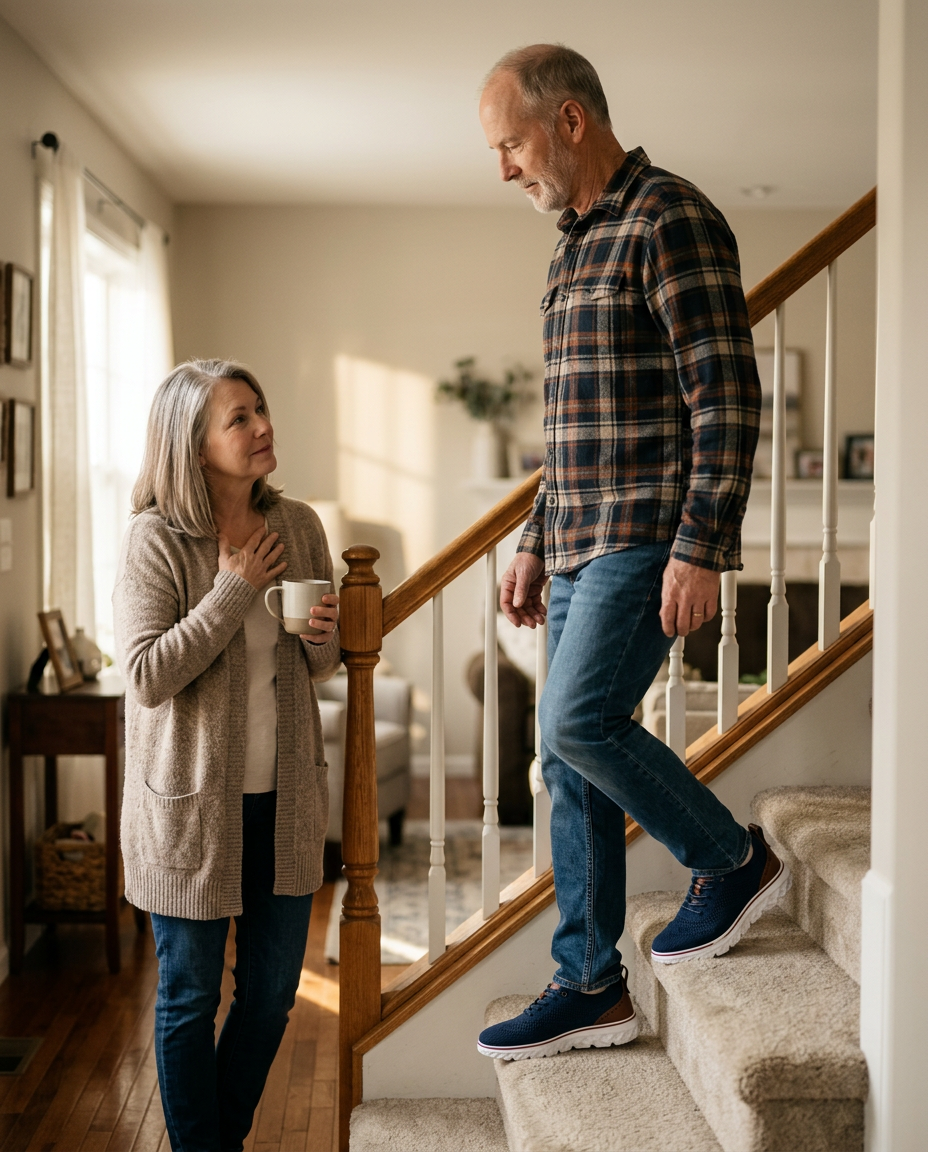
Then one morning she was at the bottom of the stairs with her coffee, and I came down without holding the rail.
Hands free. She didn't say a word. She didn't have to.
She just looked at me. And I could see it on her face.
Relief.
Because she'd spent the last year watching me turn into her dad. And she didn't want to bury me next.
Frank stopped moving because it hurt too much to keep going. I'm not going out like that.
I can't control everything. Nobody can. But I can control what I stand on every single day.
The shoes Steve told me about
OrthoFit Men's Orthopedic Walking Sneakers
"The difference between staying on your feet, and sitting it out."
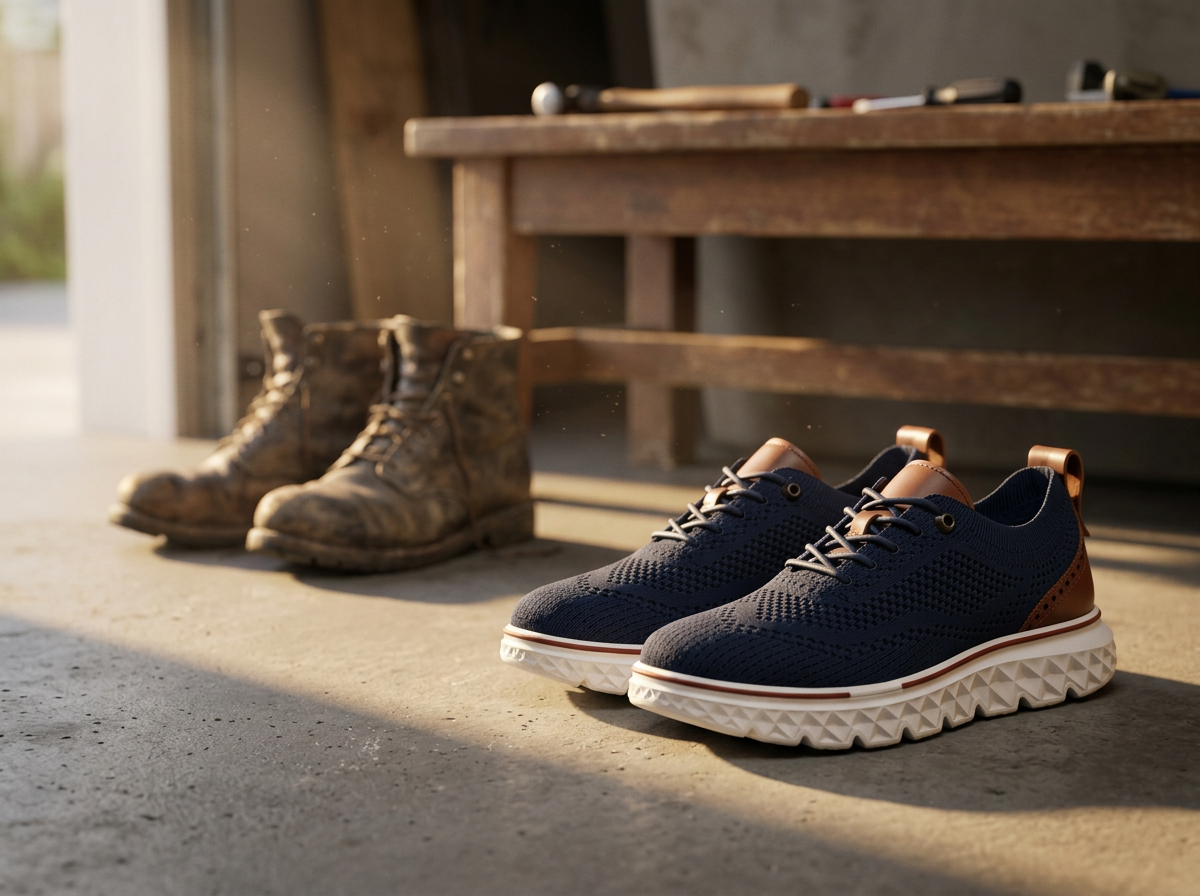
Mine, and Frank's old boots. I left them where they were.
A car's only as good as what's touching the road. Here's what's under mine now, in plain English:
Arch support that doesn't collapse
It's built into the shoe, not a bit of foam you slip in. Holds your foot in line so your knees and hips aren't twisting to make up for it.
A heel that takes the shock
Cushioned, but firm underneath. Not the squishy stuff that sinks. It soaks up the jolt off concrete so your joints don't have to.
A wide, rounded toe box
Your toes can spread out the way they're meant to. That gives you a wider, steadier base to stand on.
A level, steady sole
Keeps you standing square instead of rolling. Linda says I stand taller now. Breathable on top too, so they're fine all day.
And they don't look like orthopedic shoes, which I was worried about. Smart enough for dinner out, tough enough for a day in the garage. They go with jeans, chinos, whatever. They come in a few colours, in standard and wide.
Available in 4 colours
Editor's note: When we checked on 21 October 2026, OrthoFit was still running its 50% off sale, with free shipping and a 30-day money-back guarantee. Sales like this don't tend to last, so if you're thinking about it, check the price while it's on.
Frank had every one of these signs, and none of us put it together. Tap the ones that fit you:
Ticked two or more? Here's what nobody told Frank: if you shuffle when you walk, you're not being careful. You're already falling, just in slow motion. Start with what you're standing on. And tell your doctor about the wobbles. Frank never did.
And if you're reading this about your husband or your dad: do what Carol did. Don't wait for him to bring it up. Men like us never do.
The nightstand thing. I do that every single morning and never thought twice about it. Ordered a pair. My wife's been on at me for a year.
167Reply1d
GW
Gary WalshAuthor
Good man, Bill. Wear them as your everyday shoes, not just for special occasions. And mention the wobbles to your doctor too. Took me far too long.
SM
Sue M.
My dad had a fall last year and was never quite the same. When I saw my husband holding onto the kitchen counter to stand up, I ordered these that night. He grumbled. He wears them every day now.
124Reply2d
KD
Ken D., 74
Took me about a week to really notice. Feet first, then my back settled down. The big thing for me is I feel planted. I'm not watching every step anymore.
91Reply4d
TR
Tom R., 66
The bit about squishy running shoes is spot on. Spent a fortune on the "comfiest" ones in the shop and my knees were worse. These feel firmer underfoot but much more comfortable by the end of the day. Go wide if you've got wide feet.
58Reply1w
Your body's trying to catch you. Give it the foundation it needs.
Frank didn't get a warning he understood. You just did.
Limited-time sale: 50% off today, 21 October
Men's Orthopedic Walking Sneakers
5,124 verified reviews
$144.00$288.00You save $144.00
A fraction of what I spent on orthotics and physio that didn't help.
Prices in NZD · Shipping to New Zealand
Built-in arch support that doesn't collapse
Shock-absorbing heel and a level, steady sole
Wide toe box for a stable base · Standard and wide fits
2Pick your colour and size (your usual size plus one, so a 9 becomes US 10), then Standard or Wide.
3Check out securely. Your pair ships free, straight to your door.
30-Day Money-Back Guarantee
Wear them for 30 days. Walks, errands, the garage, the stairs. If you don't feel the difference, send them back for a refund. Like I said: nothing to lose.
Questions readers asked
Will these stop me from falling?
No shoe can promise that, and anyone who says otherwise isn't being straight with you. What good shoes can do is give your feet a steady, supportive base instead of a flat or collapsing one. Health services like the UK's NHS list well-fitting, supportive footwear among the simple things worth checking. If you've had a fall or keep feeling unsteady, please talk to your doctor too.
Can shoes really help with back and knee pain?
Your feet set the alignment for everything stacked on top of them, thousands of times a day. Supportive, shock-absorbing shoes help reduce the impact and imbalance that can strain your knees, hips and lower back. They're not a replacement for medical care: if your pain is severe or keeps getting worse, see your doctor.
I already have cushioned shoes. Why aren't they working?
Soft isn't the same as supportive. A lot of "comfort" shoes use squishy foam with no structure, so your foot sinks and rolls with every step. OrthoFit pairs a cushioned heel with built-in arch support and a firm, level sole, so you get the comfort without losing the stability.
How soon will I notice a difference?
Everyone's different. Some men feel steadier and more comfortable in the first few days, like Gary did. For others it takes a couple of weeks. Wear them as your everyday shoes, not just for special occasions, and give them the full 30 days. That's what the guarantee is for.
What size should I order?
Our sizes are listed in US men's sizing, which runs one size bigger than yours. Just add one to your usual size: if you normally wear a 9, choose US 10. If your feet are on the wider side, or most shoes feel tight by the afternoon, choose Wide for extra room through the toes.
I'm not great at ordering online. Is it easy?
Yes. Tap any orange button on this page, pick your colour and size, and check out. The checkout is secure, shipping is free, and your pair comes straight to your door.
I'm buying them for my husband or dad. Any tips?
Check the size printed inside a pair he wears a lot. If his feet swell or his shoes feel tight later in the day, go Wide. And if they're not right, the 30-day money-back guarantee has you covered.
What if they don't work for me?
You're covered by the 30-day money-back guarantee. Wear them, walk in them, live in them. If you're not happy, send them back for a refund.
P.S. If you skipped to the end, here's the short of it. My father-in-law's knees gave out in his garage at 72, six months after pain made him stop moving. At his funeral it hit me that I was wobbling out of bed and gripping the stair rail the same way. Insoles, running shoes, orthotics, physio. None of it touched it. It was what I was standing on. They're 50% off right now, with free shipping and 30 days to send them back. The first wobble is the warning. Don't ignore it like Frank did.
This is an advertisement and not a news article, blog or consumer protection update. The story above is a dramatised account for illustrative purposes; names and details have been changed. Reader comments are shared for illustration. Fall statistics are from the U.S. Centers for Disease Control and Prevention. The content is general information only and is not medical advice. OrthoFit shoes are not a medical device and are not intended to diagnose, treat or prevent any condition, including falls. Individual results vary. If you have had a fall, feel unsteady, or have severe, persistent or worsening pain, see your doctor or a qualified health professional.