
Doctors Call It "Just Your Age." But for Many Men Over 60, That Nagging Lower Back Pain Starts Somewhere Much Lower
As we get older, our feet quietly lose the cushioning and support they had at 40. Most men never change their shoes to make up for it, so every step jars straight up into the lower back.
Below: a simple 10-second test to see if your shoes are part of the problem, and the easy swap more and more men are making.
By Michael Harris · Senior Health Writer
Updated 21 October 20265 min read
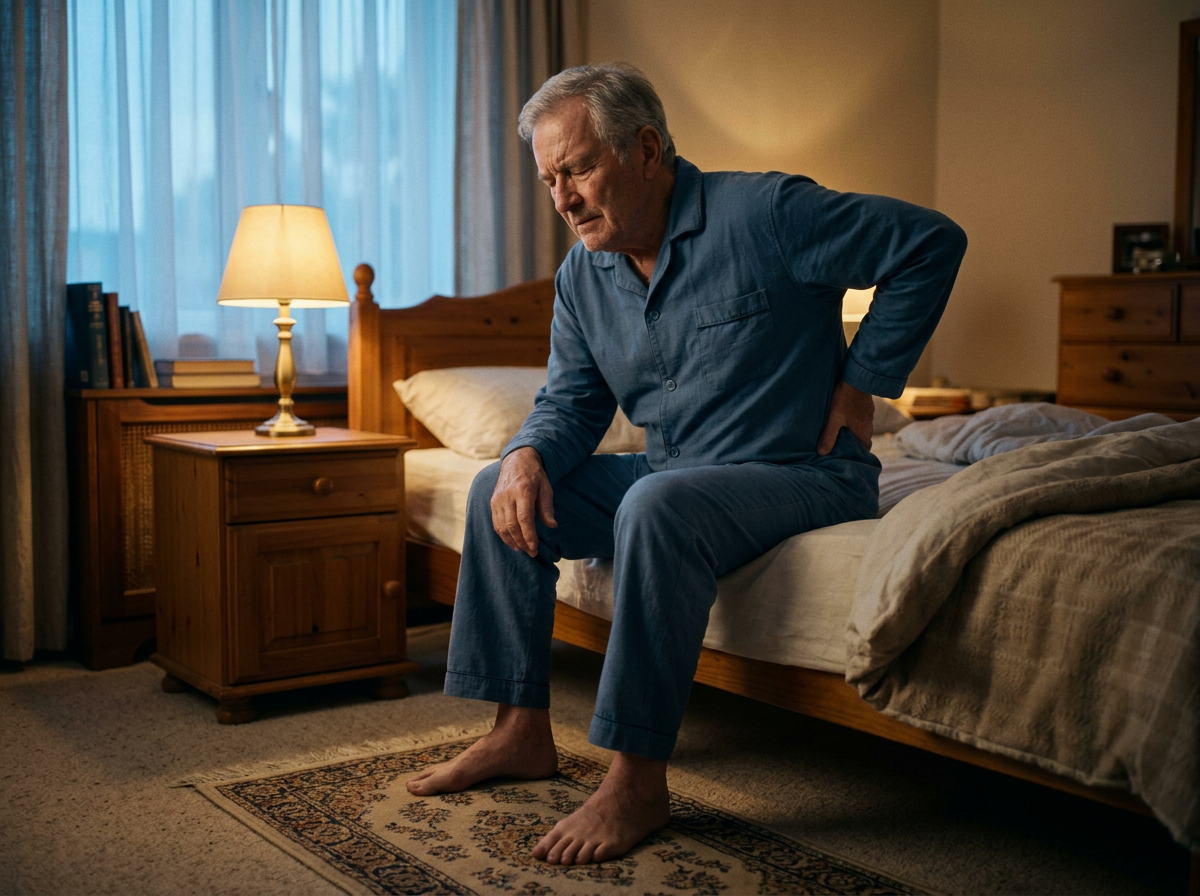
You sit on the edge of the bed a little longer than you used to. Not because you're tired. Because you're bracing.
7:00 AMThe first few steps to the bathroom. Stiff, slow, one hand on the wall.
10:30 AMStanding in line at the shops. You shift from foot to foot, looking for something to lean on.
2:00 PMThe walk you planned gets cut short. "Let's head back."
6:00 PMThe grandkids want you down on the floor to play. You stay in your chair and watch.
When you mention it to the doctor, you get the same answer every man our age hears: "It's just part of getting older."
So you've tried the stretches. The heat packs. The tablets. Maybe even a new mattress or a better armchair.
They help for a day or two. Then the ache comes back, because none of them touch the one thing you do thousands of times a day.
You walk. And at our age, every one of those steps lands very differently than it used to.
The hidden cause
What Happens to Your Feet After 60 (That Nobody Mentions)
Two quiet changes happen to almost every man as the years go by:
Your heel's natural cushion thins
The soft pad under your heel is your body's built-in shock absorber. With age it gets thinner, so every step hits harder than it did at 40.
Your arches start to sink
The tendons that hold up your arch weaken over the years. Your feet slowly flatten and roll inward.
Here's the part that matters: your feet changed, but your shoes probably didn't. Most men are still walking in the same kind of flat, flimsy sneakers they wore decades ago, and now there's almost nothing between the footpath and your spine.
The 600-tonne problem
Each time your heel lands, a jolt of roughly 1.5 times your body weight shoots up through your legs. Over a normal day, that adds up fast:
5,000
steps
a day
120kg
per heel
strike
600
tonnes
a day
Illustrative estimate for a man weighing 80 kg, walking about 5,000 steps a day, with ground forces of about 1.5× body weight.
With less natural cushioning and nothing in the shoe to absorb it, that force has to go somewhere. It travels up the chain, and it ends in your lower back.
The chain reaction, step by step
-
1
Your feet
Sinking arches let your feet flatten and roll inward.
-
2
Your knees
Your shins and knees twist inward to follow them.
-
3
Your hips
Your pelvis tilts, pulling your lower spine out of its natural curve.
-
Your lower back
Your back muscles clench to hold you upright. All day. Every step. That's the ache.
"It isn't your age that's hurting your back. It's that your shoes never caught up with it."
Why the tablets, stretches and heat packs keep "wearing off"
They all work on the top of the chain. None of them fix the bottom.
Tablets
Dull the pain for a few hours. Do nothing about the cause.
Heat packs
Relax the muscle tonight. It tightens up again tomorrow.
Stretching
Loosens what your shoes tighten right back up by lunch.
New mattress
Helps while you sleep. Ignores every hour you're on your feet.
Try this right now
The 10-second test that shows if your shoes are hurting your back
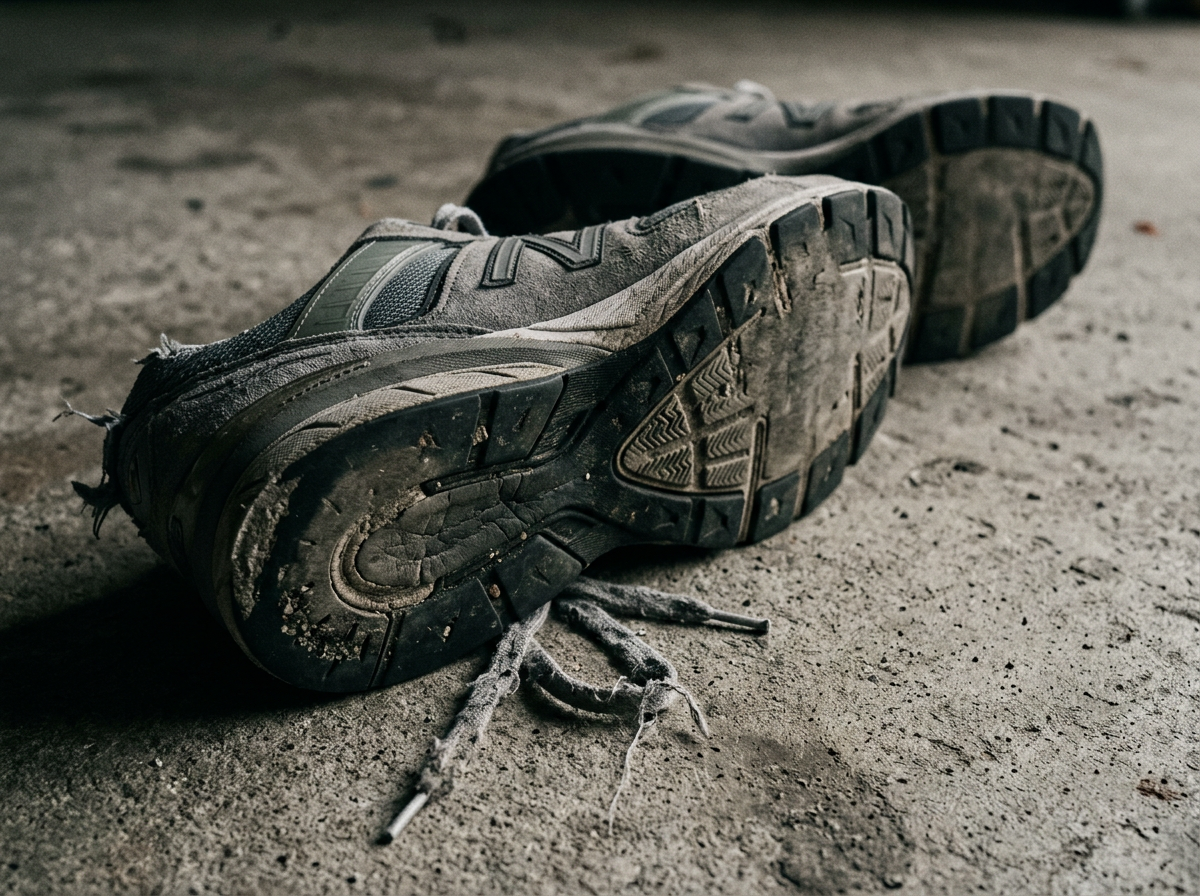
Pick up the pair you wear most, turn them over, and tap each one that's true:
Ticked even one? Your shoes have most likely stopped protecting your back, and every step is costing you. So what should you be walking in?
The simple swap
Why men over 65 with stubborn back pain are switching to OrthoFit
OrthoFit's Men's Orthopedic Walking Sneakers were designed to put back what the years have taken away: the cushioning, the arch support and the steadiness your feet used to give you on their own.
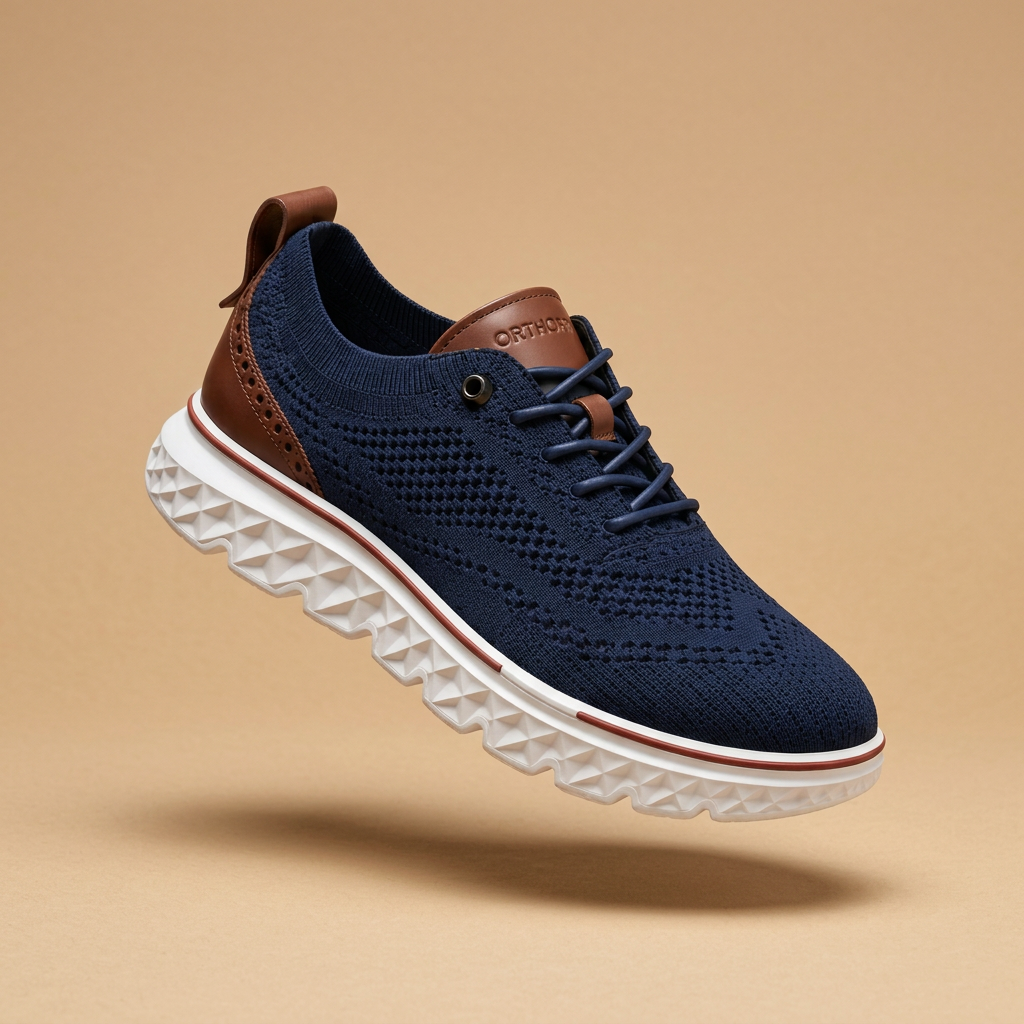
Thick shock-absorbing sole
A deep, cushioned midsole does the job your heel pad used to do, softening every step on footpaths, tiles and hard floors before the jolt reaches your spine.
Orthopedic arch support
Holds up your sinking arch so your feet stop rolling inward, which is where the whole chain reaction starts.
Steady leather heel
A firm leather heel cups your foot and keeps it planted, so your knees and hips stay lined up and you feel sure-footed on grass, gravel and steps.
Standard & wide widths
Extra room for feet that have spread over the years, or tend to swell by the afternoon. No pinching, no squeezing.
And no, they don't look like "old man shoes"
Most men put off proper supportive shoes for one reason: they don't want to walk around in something that looks like it came out of a hospital catalogue.
OrthoFit looks like what it is: a smart, modern sneaker. Navy knit, a chestnut leather heel, a clean white sole. Wear them to lunch, on the golf course, around the garden or on a long walk with your wife. Nobody will know they're doing anything for your back. Only you will.

Daily walks
Golf
Gardening
Shops & errands
What to expect after you make the switch
-
The very first steps
Firm support under your arch and a soft, cushioned landing, instead of that flat, jarring thud.
-
Week 1
Feet that feel less tired after running errands, a morning in the garden or a round of golf. For many men, it's the first thing they notice.
-
Weeks 2–4
As your steps settle into better alignment, many men say the ache shows up later in the day, hits softer, or stops showing up at all.
Everyone's body is different and individual experiences vary.
OrthoFit vs. the shoes you're wearing now
| Feature | OrthoFit | Ordinary |
|---|---|---|
| Replaces lost heel cushioning | ||
| Real arch support | ||
| Steady, planted heel | ||
| Wide option for swollen or wider feet | ||
| Comfortable all day long | ||
| Looks like a smart everyday sneaker | Sometimes |
"I wish I'd done this years ago"
What men are saying after the switch
"Back to my morning walks"
My doctor said it was just age, and I didn't argue. My daughter sent me these. Three weeks later I'm walking to the paper shop and back every morning. Hadn't done that in two years.
"Walked all 18 holes again"
I'd given up walking the course and started taking a cart. First round in these, I walked all 18 and my back was fine that night. The lads couldn't believe it.
"Comfortable from day one"
Wide feet, and I've struggled with shoes for years. The wide fit is spot on. My wife says I'm not grimacing on the stairs anymore, and they actually look smart.
Picture this
30 days from now…

You swing your legs out of bed and just… stand up. No bracing. No hand on the wall.
You walk to the shops and back without looking for a bench. When your wife suggests the long way home, you're the one who says yes.
And when your granddaughter runs at you with her arms up, you scoop her up without thinking twice.
That isn't turning back the clock. It's simply giving your feet back the support the years took away.

Men's Orthopedic Walking Sneakers
Less than a single physio or massage visit, and you get to wear them every day.
Prices in NZD · Shipping to New Zealand
- Thick cushioned sole to replace lost heel padding
- Orthopedic arch support that stops the chain reaction
- Standard & wide widths
- Looks smart with jeans, chinos or shorts
Safe, secure checkout
Ordering is easy:
- 1Tap the orange button above.
- 2Choose your size (your usual size plus one, so a 9 becomes US 10), then Standard or Wide.
- 3Check out securely. Your pair is delivered to your door.
30-Day Comfort Promise
Walk in them for a full month. If your feet and back don't thank you, send them back. The only thing you risk is staying in the shoes you're in now.
Common questions
Can shoes really make that much difference to back pain?
Your feet set the alignment for everything stacked on top of them, thousands of times a day, and they lose natural cushioning and support as we age. Supportive, cushioned shoes help reduce the impact and imbalance that strain your lower back. They're not a replacement for medical care: if your pain is severe or persistent, please see your doctor.
Will people be able to tell they're orthopedic?
No. The navy knit upper, chestnut leather heel and clean white sole look like a smart casual sneaker. All the support is on the inside.
What size should I order?
Our sizes are listed in US men's sizing, which runs one size bigger than yours. Simply add one to your usual size: if you normally wear a 9, choose US 10. If your feet are on the wider side, or most shoes feel tight by the afternoon, choose Wide for extra room through the toes and forefoot.
I'm on my feet a lot: walks, golf, the garden. Are they up to it?
That's exactly what they're built for. The thick cushioned sole softens footpaths, tiles and hard floors, and the steady heel keeps you feeling planted on grass and uneven ground.
What if they don't work for me?
You're covered by our 30-Day Comfort Promise. Wear them, walk in them, and if you're not happy, send them back.
P.S. If you skipped to the bottom, here's the short version: your back pain may not be "just your age." Your feet lose their natural cushioning over the years, and your shoes never made up for it. Tablets and stretches treat the top of the chain. OrthoFit fixes the bottom. They're 50% off today and covered by a 30-day promise, so the only real risk is another year of bracing before you stand up.
Get My OrthoFit SneakersThis is an advertisement and not a news article, blog or consumer protection update. The content is for general information only and is not medical advice. Individual results vary. If you have severe, persistent or worsening back pain, consult your doctor or a qualified health professional.

