
10 Reasons Men Over 60 Are Switching to OrthoFit for Long Days on Their Feet
By Tom Bradley| Updated 8 November 2026| 4 min read
Most men over 60 are still buying shoes the same way they did at forty. Pick a size, check the price, and hope for the best. Then they wonder why their feet are done by four o'clock.
Feet change in your sixties. They spread, they swell later in the day, and the natural padding under the heel and the ball of the foot gets thinner. By 65 most men can feel it, even if they never mention it.
Here are ten things worth knowing before you buy your next pair.
Over 60 and nodding at any of these?
- Feet that ache by the afternoon, even on an easy day
- Shoes that feel tight by evening
- Feet that have got wider over the years, or a sore big toe joint (gout, bunions, arthritis)
- Less steady on wet floors and gravel than you used to be
- A wardrobe of “comfort” shoes that stopped being comfortable

1. It Doesn't Look Like an Orthopaedic Shoe
Most support shoes are beige, square-toed and covered in velcro. You know the ones. They help your feet and you'd rather not be seen in them.
This is a plain sneaker in four colours. It goes with jeans, chinos or trousers, and it goes out to dinner without anyone looking twice.
Nobody knows unless you tell them.

2. The Footbed Doesn't Pack Down Flat
Soft is not the same as supported. Most comfort shoes are one block of foam that feels great in the shop and is crushed flat inside two months. Then your arch is standing on nothing and you are back where you started.
Press your thumb into the footbed you have on right now. If the dent stays, that's your answer.
This one is a structured, multi-density footbed that holds its shape under your weight.

3. Real Room Across the Front
In older adults the most common place for foot pain is the toes and the forefoot, ahead of the arch and ahead of the heel. It is the part of the shoe nobody thinks about.
Gout lands in the big toe joint. Bunions and crossover toes get squeezed from the sides. Calluses build up where the pressure has been going.
Wide, rounded toe box. Your toes sit flat instead of stacked.

4. Standard and Wide Widths, Not Just a Bigger Size (69% Wear the Wrong Size)
One study measured 172 men aged 60 to 90. 69% were wearing shoes longer than their feet.
That is what happens when your feet get wider and the only fix on the shelf is a longer shoe. You end up in something too long and still too narrow.

5. It Still Fits When Your Feet Swell
A shoe that fit at breakfast is too tight by dinner and your socks leave marks.
About one in five adults over 51 deals with it. The blood pressure tablets a lot of men take are a known cause, and so is the ibuprofen for sore knees. It isn't going away.
The mesh upper gives as the day goes on.
Sounding like your feet already?
Today they are $148.00 NZD, down from $295.00 NZD, with free tracked shipping to New Zealand.
30-day trial. One email gets your money back.

6. A Wide, Flat Base With Real Tread
A sole worn down on one side doesn't sit flat anymore. It rolls when you put your weight on it, and you feel it on wet tile and gravel.
One in three New Zealanders over 65 has a fall every year. Women fall more often. Men die from it at higher rates. Those are ACC figures, and nobody is going to tell you a shoe fixes that.
What this has is a wide rubber outsole with real tread and a firm footbed underneath.

7. Built for Long Days on Hard Floors
Retired rarely means sitting down. Concrete, tile, the aisles at Mitre 10, a whole day walking round a new city. In a flat shoe your weight lands on the same two spots over and over, and by hour four you are looking for a reason to sit down.
A shaped footbed spreads the load across the whole foot.
Your feet feel about the same at night as they did that morning.

8. It Ticks the Three Things Podiatrists Tell Men to Look For
Ask any podiatrist what to look for in a walking shoe after 60 and you get the same three answers. Room in the toe box. Structured arch support rather than soft foam, because foam packs down and stops holding anything up. A stable sole with real tread.
That is the whole list. This ticks all three.
Order a pair, take them to your next appointment and ask. We would rather you check.

9. Thirty Days to Try Them on Real Days
There is nothing to break in. Put them on the day they arrive.
Then wear them for thirty days. The backyard, walking the dog, the airport, Mitre 10, dinner out with the family.
If they are not the most comfortable shoes you own, one email gets your money back.
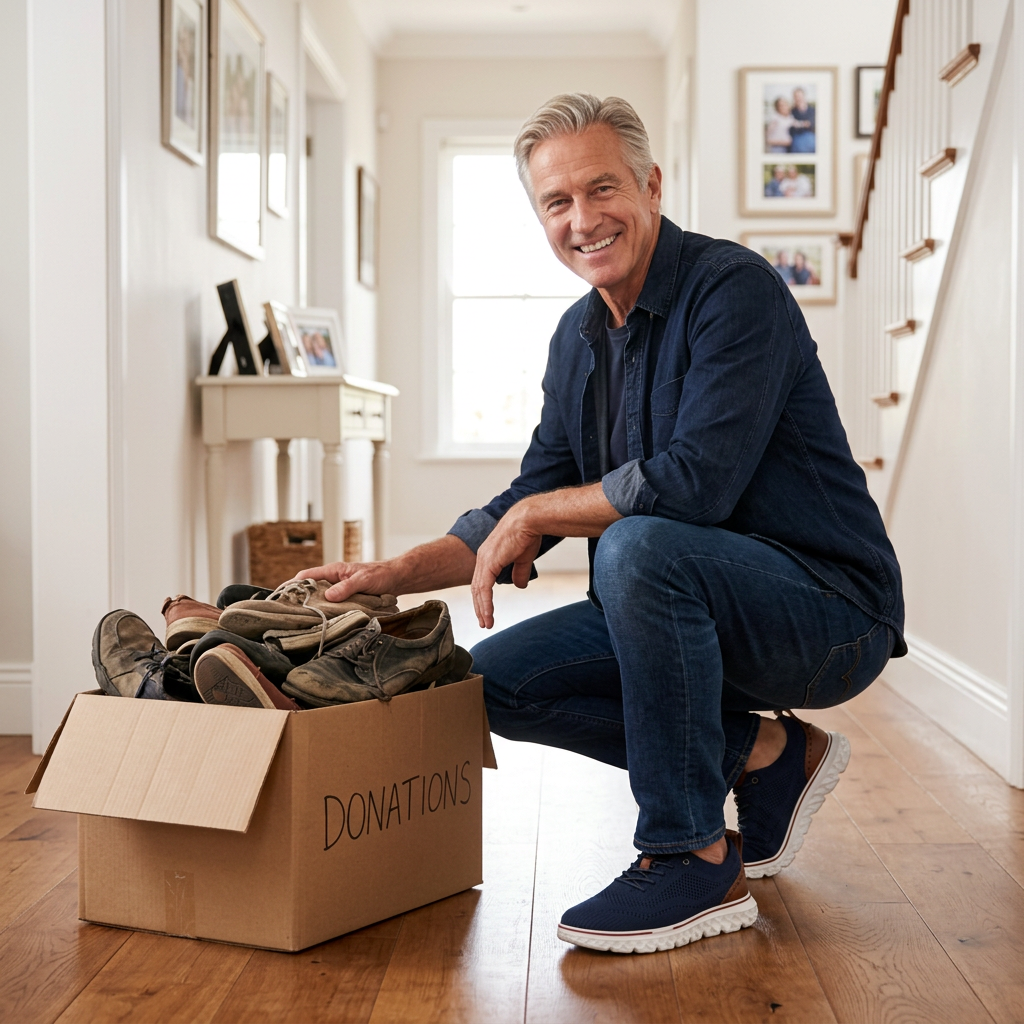
10. Men Across New Zealand Are Switching (700,000+ So Far)
Most of them had a wardrobe with three or four failed pairs in it before they got here.
$148.00 NZD, down from $295.00 NZD, with free tracked shipping to New Zealand. Standard and Wide, NZ/UK 5.5 to 13 (US 6.5 to 14), four colours.
How to Get Yours (50% Off Plus Free Shipping)
Right now these are $148.00 NZD, down from $295.00 NZD, with free tracked shipping to New Zealand. While stock lasts.
- 1
Pick your colour and size. Standard and Wide widths available, NZ/UK 5.5 to 13 (US 6.5 to 14). Not sure? Order your normal size. If it is wrong, the exchange is free.
- 2
Put them on when they arrive. There is nothing to break in.
- 3
Wear them for thirty days. Outside, on real days. If they are not the most comfortable shoes you own, one email gets your money back.
More than 700,000 men have already switched, including men right across New Zealand.
Helpful tip: They make a good gift for a man who has quietly stopped doing things because of his feet and will never buy himself anything. Order his normal size, and if it is wrong the exchange is free.


